The Feeling of Exploration
India's cleanest city and its most curious — Indore rewards every explorer with world-class street food, hidden history, and an irrepressible entrepreneurial spirit.
Indore is India's most surprising city. Seven consecutive years as India's cleanest city under the Swachh Bharat Mission, a booming financial services sector, IIT Indore's research campus, and one of the country's most legendary street food cultures — Indore consistently exceeds every expectation.
AIESEC in Indore places exchange participants in a city that rewards curiosity. From the centuries-old lanes of Rajwada to the startups of Vijay Nagar, from the serene Ralamandal Wildlife Sanctuary to the chaotic joy of Sarafa Bazaar's midnight food stalls — Indore is built for the feeling of exploration.

What makes Indore unforgettable.

By day, Sarafa Bazaar is a jewellery and bullion market. After 10 pm, it transforms into one of India's most celebrated food streets — chaat, jalebi, garadu, and Indori-specific dishes served from hundreds of stalls until 2 am. The food here is specific to Indore in a way that no restaurant elsewhere can approximate. It is one of India's best food experiences.

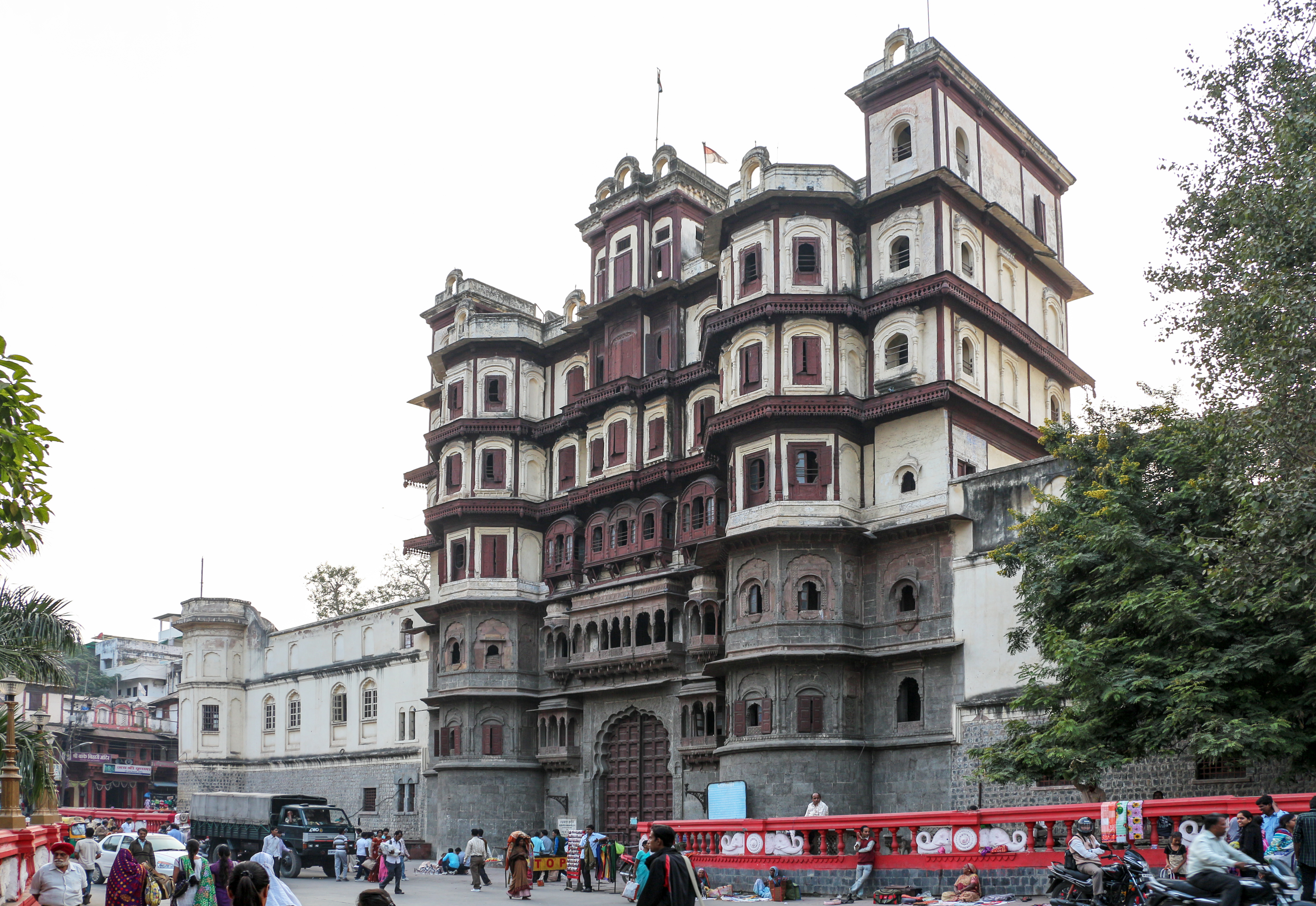
The Rajwada is a seven-storey Holkar dynasty palace built in 1747 at the geometric centre of old Indore — its facade combining Mughal, Maratha, and French architectural elements in a way that tells the story of the empire that built it. The adjoining square is one of the most pleasing urban spaces in the city. It is the anchor of old Indore and worth an evening walk.

IIT Indore, established in 2009, has grown into one of the most research-active of the newer Institutes of Technology, particularly in quantum computing, photonics, and materials science. Its proximity to Indore's commercial and political networks gives it a practical orientation. For exchange participants, the campus provides access to a research-driven peer community in a city that is actively rising.

Indore has won India's Swachh Survekshan Award for cleanest city seven consecutive years — a streak that reflects a genuine civic transformation, not just official metrics. The streets, markets, and public spaces are visibly and unusually clean for a city of 3.5 million. Living here gives exchange participants an instructive example of what Indian cities can achieve when governance and community align.

Ralamandal is 12 kilometres from central Indore — 2,342 hectares of deciduous forest with leopards, sambar, and over 150 bird species that most residents have never visited. The ropeway to the hilltop viewpoint and the reservoir within the forest make it a good half-day trip. Its proximity to a major city and its lack of crowds make it an easy and rewarding experience.
The Kanch Mandir, commissioned in 1903, is a Jain temple whose interior is entirely covered in mirror mosaic — floor, ceiling, columns, and shrine all surfaced in coloured Belgian glass. The effect is disorienting, opulent, and entirely singular. It is among the most visually extraordinary interiors in India and takes about 20 minutes to experience properly.

The Malwa Utsav brings classical music, folk art, and craft exhibitions to Indore's riverfront each year, reflecting a cultural tradition that runs deeper than the city's commercial reputation suggests. The Ahilya Utsav, celebrating the great Holkar queen, has a particular civic pride. These festivals are the best entry points into Indore's identity beyond food and commerce.

Indore's stock exchange — India's first outside Bombay, established in 1930 — reflects a financial culture that has persisted and evolved into a serious startup ecosystem. The city now has a significant venture funding network, several successful exits, and a commercial energy driven by its trading community. For exchange participants interested in business and entrepreneurship, Indore is one of India's most underrated environments.
Everything you need to know before arriving in Indore.
Options include hostels, host families, and shared flats — ideally within a 4 km radius of your workplace. Your local committee will help arrange everything.
Indore is excellent value — one of India's most affordable large cities. Budget ₹8,000–10,000 per month for daily transport, meals, and expenses. Incredible food quality is available at very low prices.
City buses (i-bus), auto-rickshaws, and Ola/Uber cabs provide good connectivity. Indore is a well-planned city and the cleanliness makes walking and cycling genuinely pleasant.
You'll need a valid Indian visa for your exchange. Your local committee will provide a detailed visa guide and assist with the application process.
Indore has excellent private and government healthcare including Bombay Hospital and CHL hospital chain. Your local committee provides health guidelines and emergency support 24/7.
Hindi is the primary language across Indore. English is understood in professional and academic settings. Locals are famously warm and will appreciate any attempt to communicate in Hindi.
Jio and Airtel offer strong 4G/5G coverage across Indore. SIM cards are available at Devi Ahilya Bai Holkar Airport or any mobile store with your passport.
Indore is a predominantly Hindu city with significant Jain influence — dress modestly at temples, remove shoes before entering, and be respectful of vegetarian food norms in many households and restaurants.
Two ways to experience Indore through AIESEC.

A professional internship to accelerate your career development. Work with Indore's industries and gain real-world professional skills in a global environment.

Bridge educational gaps by teaching in Indore's schools and communities. Develop culturally responsive pedagogy while making a lasting impact on young learners.
Your dedicated team in Indore, ready to make your exchange unforgettable.
Reach out to our national team for any questions about exchanges in Indore.