
The Feeling of Togetherness
Where Punjab's legendary warmth, music, and community bonds turn strangers into family within hours of arriving.
Jalandhar is the beating heart of Punjab — a city with over 2,000 years of history that pulses with Bhangra, bountiful food, and the legendary warmth of the Punjabi people. Known as the sports capital of Punjab, Jalandhar produces sporting goods used by champions across the world, and nurtures athletes who represent India on the global stage.
AIESEC in Jalandhar offers exchange participants a deeply immersive experience in one of India's most community-oriented cities. Whether sharing a home-cooked Punjabi meal, attending a Gurudwara langar, or dancing to live Bhangra — the feeling of togetherness is inseparable from every moment here.

What makes Jalandhar unforgettable.

Bhangra was born as a harvest dance — men celebrating the end of the rabi crop in the Punjab plains. Jalandhar's proximity to the agricultural heartland and its tradition of music colleges have made it a centre of the form. The experience of watching bhangra performed in its regional context is entirely different from what a competition or stage show shows.

Gurudwara Devi Talab is among Punjab's most significant — its tank of holy water and architecture drawing Sikh pilgrims from across the region. The langar tradition — free community kitchen open to all, without distinction — is practised here at full scale. Sitting down to eat langar with several hundred strangers is one of the most egalitarian and moving experiences available in any Indian city.

Jalandhar manufactures a significant portion of the world's sports goods — cricket balls, field hockey sticks, boxing gloves, and gymnasium equipment — a legacy of the British cantonment's sporting culture now operating at industrial scale. The city has produced multiple Olympians, particularly in hockey and athletics. The manufacturing heritage is accessible in the wholesale sports goods markets in the Model Town area.

Punjabi food in Jalandhar operates at its source — lassi that requires two hands to lift, makki di roti with sarson da saag made for the climate rather than the restaurant, and street food that runs on the logic of agricultural surplus. The roadside dhabas on the GT Road are among the most authentic in the state. Eating here recalibrates your understanding of the cuisine.
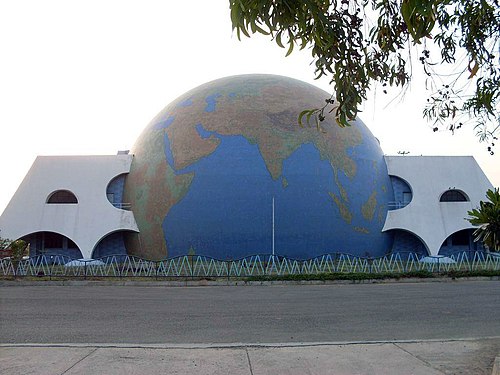
Pushpa Gujral Science City is the largest science centre in India north of Mumbai — 72 acres of interactive exhibitions, a planetarium, an IMAX theatre, and outdoor installations covering physics, life sciences, and technology. Its programming makes it unusually busy for a science museum. For exchange participants running educational outreach, it is a natural partner institution.

Jalandhar's universities — Lovely Professional University, the largest private university in India, and CT University among them — create a dense student population that gives the city a particular young energy. The AIESEC chapter here is among Punjab's most active, supported by students eager for exchange connections. For incoming participants, peer integration is relatively fast.

Jalandhar Cantonment was established in 1846 following the First Anglo-Sikh War and remains one of the oldest functioning cantonments in North India. The broad, tree-lined roads, old colonial bungalows, and institutional buildings of the military precinct create a distinct spatial atmosphere that survives unchanged in parts. The Cantonment area is the most architecturally coherent part of Jalandhar.

Rangla Punjab Haveli, outside Jalandhar, reconstructs a traditional Punjabi village — bhangra performances, bullock cart rides, rural craft demonstrations, and regional food in an agricultural setting. It is overtly touristic, but it packages a cultural encounter that would otherwise require a week in rural Punjab to assemble. For exchange participants wanting a compressed introduction to Punjabi rural culture, it works.
Everything you need to know before arriving in Jalandhar.
Options include hostels, host families, and shared flats — ideally within a 4 km radius of your workplace. Your local committee will help arrange everything.
Jalandhar is very affordable. Budget ₹8,000–10,000 per month for meals, transport, and daily expenses. Punjab's generous hospitality often means you'll eat more than you pay for!
Auto-rickshaws, shared tempos, and local Punjab Roadways buses are the primary transport options. Ola/Uber cabs are also available for comfortable city travel.
You'll need a valid Indian visa for your exchange. Your local committee will provide a detailed visa guide and assist with the application process.
Jalandhar has solid private and government healthcare infrastructure. Your local committee provides health safety guidelines and is available around the clock for support.
Punjabi is the mother tongue and Hindi is widely spoken. English is understood in urban and academic settings. Locals will eagerly teach you Punjabi phrases — embrace it!
Jio and Airtel offer good 4G coverage across Jalandhar. Pick up a prepaid SIM at any mobile store in the city with your passport — plans are affordable and connectivity is solid.
Cover your head and remove shoes before entering Gurudwaras — this is a sign of deep respect. Punjab's culture centres on hospitality; refusing food offered is considered impolite. Embrace the warmth!
Three ways to experience Jalandhar through AIESEC.

A 6–8 week volunteering exchange for ages 18–30 focused on sustainable development goals. Create real impact in Jalandhar's communities while immersing yourself in local culture.

A professional internship to accelerate your career development. Work with Jalandhar's industries and gain real-world professional skills in a global environment.

Bridge educational gaps by teaching in Jalandhar's schools and communities. Develop culturally responsive pedagogy while making a lasting impact on young learners.
Your dedicated team in Jalandhar, ready to make your exchange unforgettable.
Reach out to our national team for any questions about exchanges in Jalandhar.